13.2 C
Islamabad
Home Blog

Fauji Cement sold 5.4 million tons of cement this year, which is a record achievement.Brig (R) Salahuddin Ayubi

0

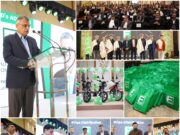
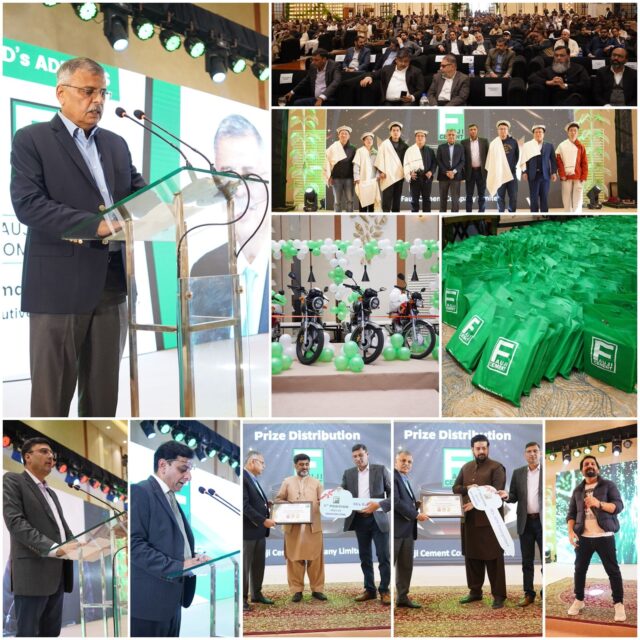
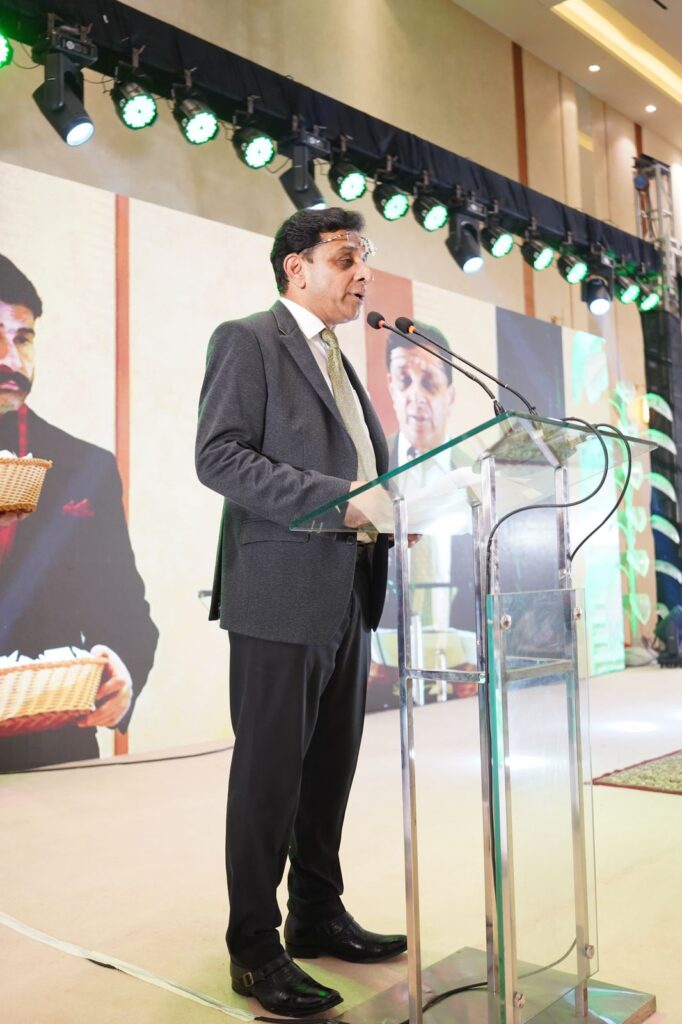
ISLAMABAD :The Annual Sales Dealers Event of Fauji Cement Company was held on 2 December 2025 at the Montage Marquee Complex, Gulberg Greens, Islamabad. The event was attended by dealers, project partners, exporters, transporters, and business professionals associated with the cement industry from across the country.
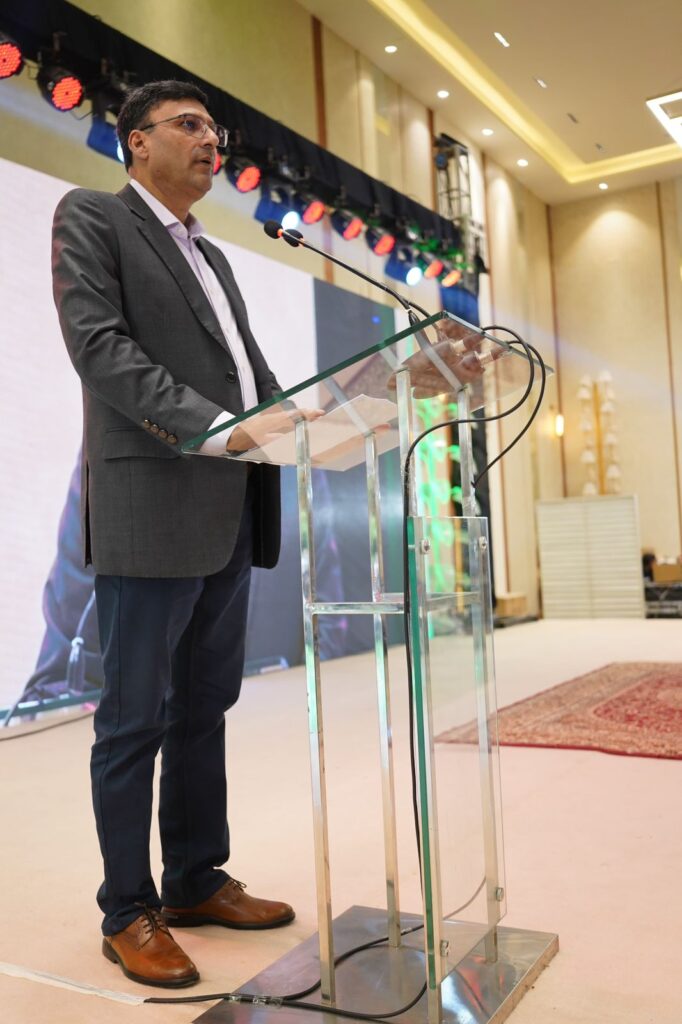
Addressing the participants, Director Marketing & Sales Brigadier (R) Salahuddin Ayubi said that dealers and business partners play a vital role in strengthening the national economy and promoting the industrial sector. He stated that the company has achieved new milestones this year, in which the hard work and professional commitment of the dealers have been fundamental.
He shared that Fauji Cement sold 5.4 million tons of cement this year, which is a record achievement. The Director Marketing & Sales highlighted the importance of the company’s role in preventing the wastage of natural resources, including responsible use of groundwater, mountain preservation, tree plantation, adoption of alternative fuels, and consistent implementation of high academic standards and new research.
Brigadier (R) Salahuddin Ayubi emphasized that the national business environment is improving, and such events not only build confidence but also play an important role in further promoting business activities. He added that the company aims to work with its partners on initiatives that benefit both the organization and the national economy.

The guest of honour, Managing Director / Chief Executive of Fauji Cement, Qamar Haris Manzoor, said in his address that despite current economic challenges, the company’s performance is commendable, and there are clear prospects for further growth in the near future. He urged the dealers to continue enhancing their professional capabilities and maintain the same dedication in the coming year.

At the conclusion of the ceremony, the guest of honour paid tribute to the high-performing dealers, stating that their contribution is the backbone of the organization’s success.
Special awards and shields were presented to the dealers who demonstrated outstanding performance during the 2024–25 period. Participants were also briefed on the company’s strategy for the coming year, including new targets and innovative business plans.
Senior management of Fauji Cement, including Brigadier Kashif Naveed, Brigadier Khurram Mirza, Umar Ashraf, Syed Kamran, Qaiser Mehmood Sheikh, and Irfan Naseem Sheikh, attended the event.

The ceremony was moderated and supervised by Muhammad Ashraf Malik, Manager Marketing/Sales.
Pakistan’s renowned singer Shan Khan captivated the audience with his performances in Urdu and Pashto.
A special luncheon was arranged for the participants at the end of the ceremony.

IRS Holds Seminar on Interfaith Dialogue; Highlights Outcomes of the 8th Congress of World and Traditional Religious Leaders

0

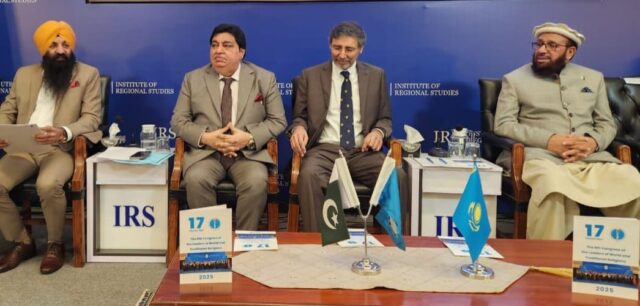
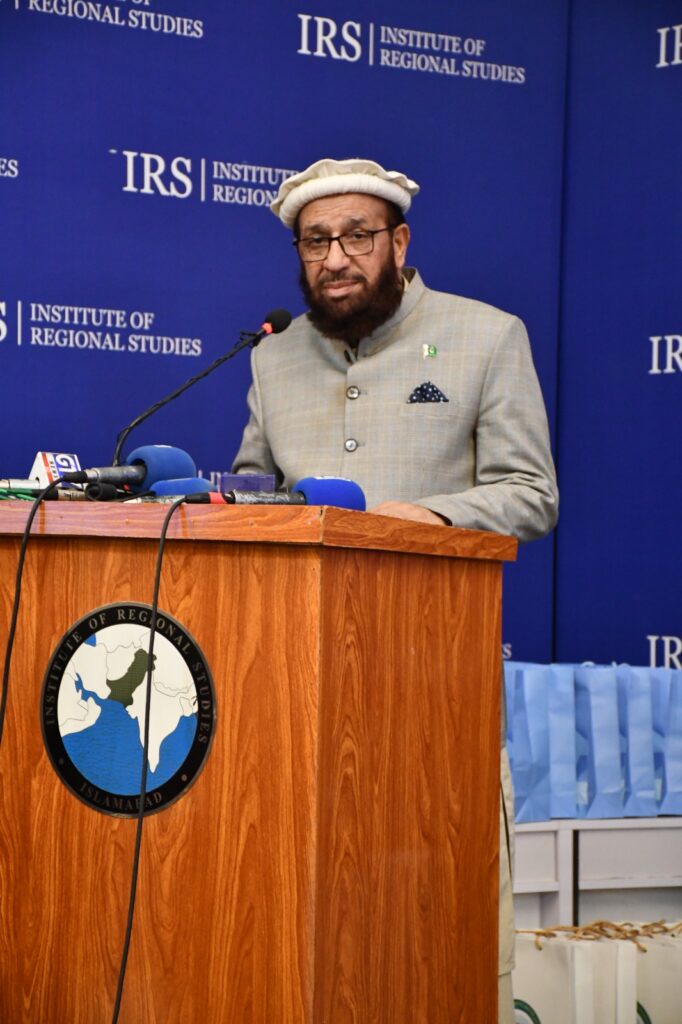
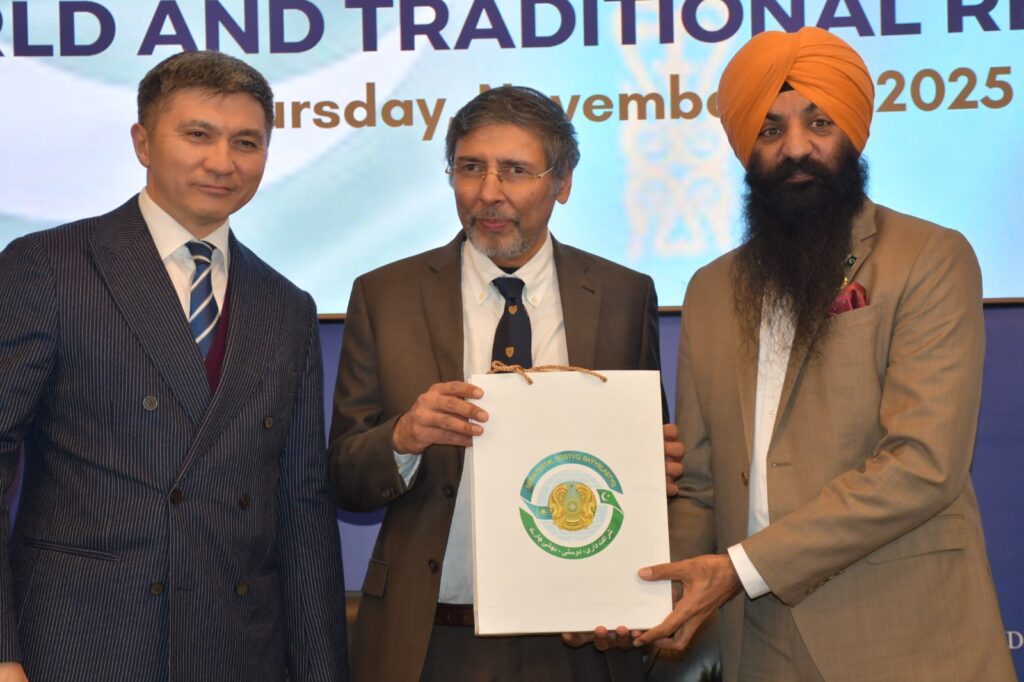
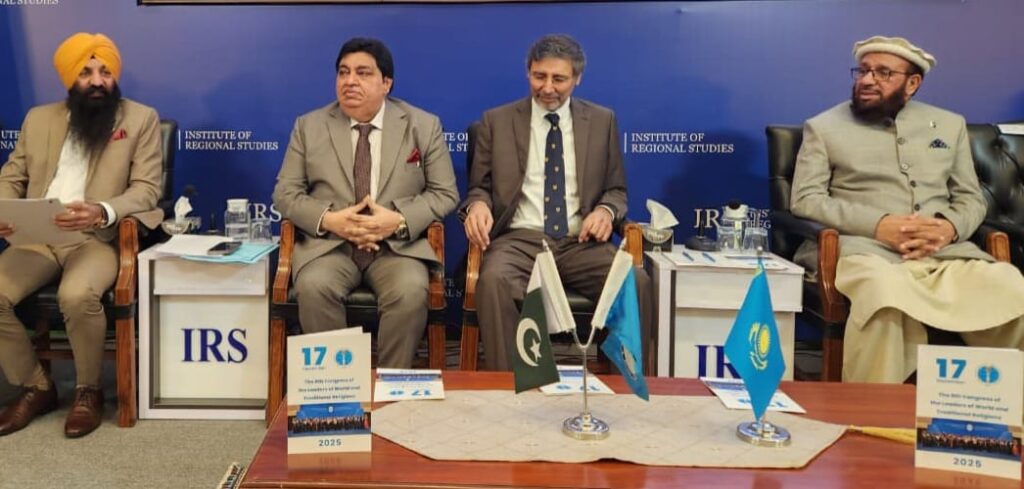
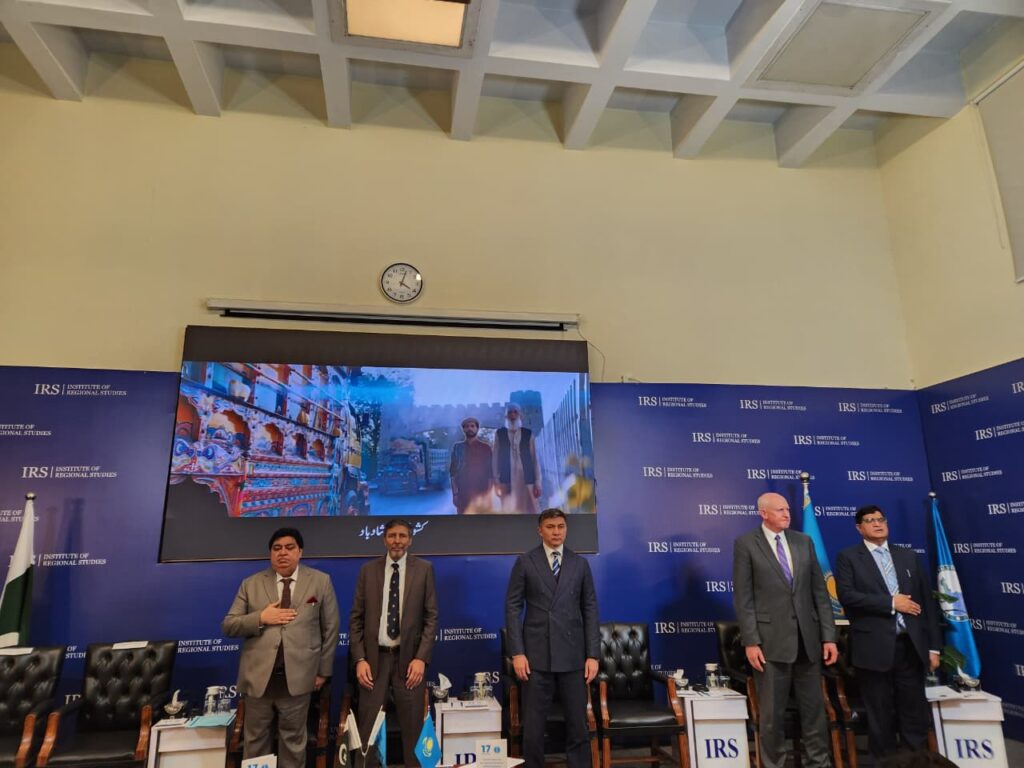
ISLAMABAD : — The Institute of Regional Studies (IRS), in collaboration with the Embassy of Kazakhstan in Pakistan and the International Islamic University Islamabad (IIUI), organised a seminar titled “Interfaith Dialogue: Outcomes of the 8th Congress of Leaders of World and Traditional Religions.” The event convened leading religious scholars, government representatives, diplomats, and academics to deliberate on global initiatives promoting peace, religious tolerance, and mutual understanding.

Distinguished speakers at the seminar—including Federal Minister for Religious Affairs and Interfaith Harmony Mr. Muhammad Sardar Yousaf, State Minister for Religious Affairs and Interfaith Harmony Kesoo Mal Kheal Das, Provincial Minister for Minorities, Mr. Ramesh Singh Arora, Kazakh officials, representatives of the Church of Jesus Christ (U.S.) including Mr. Kelly Johnson, and Prof. Dr. Muhammad Zia-ul-Haq, Director General of the Islamic Research Institute (IRI)—delivered messages advocating interfaith harmony and cooperation. They collectively emphasised that collaboration among diverse faiths and cultures is indispensable to promoting peaceful coexistence.

In his welcome remarks, Ambassador Jauhar Saleem, President of the Institute of Regional Studies, underscored the growing need for sustained interfaith dialogue in a world increasingly shaped by polarisation and conflict. He reaffirmed Pakistan’s commitment to advancing religious harmony and applauded Kazakhstan’s leadership in establishing impactful platforms such as the Congress of Leaders of World and Traditional Religions.

Ambassador Saleem stressed that open and meaningful engagement among faith communities is vital to building trust, dispelling misconceptions, and fostering peaceful coexistence.
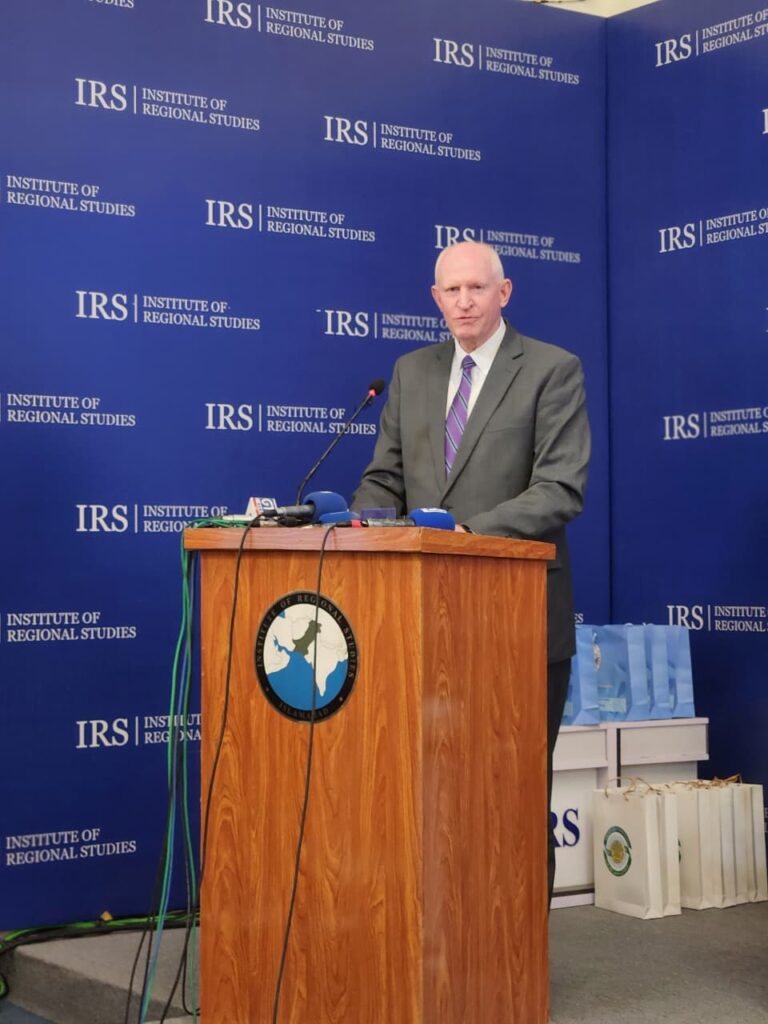
Delivering his welcome address, H.E. Mr. Yerzhan Kistafin, Ambassador of the Republic of Kazakhstan to Pakistan, reiterated Kazakhstan’s longstanding dedication to global peace and interreligious cooperation. He noted that the 8th Congress, held in Astana, reflects Kazakhstan’s belief that dialogue is the only sustainable path to a peaceful and stable world order.

Ambassador Kistafin highlighted the deep historical, cultural, and spiritual ties between Kazakhstan and Pakistan, describing collaboration on interfaith initiatives as both natural and mutually enriching. He emphasised that the “Spirit of Astana” continues to inspire nations to uphold values of tolerance, mutual respect, and peaceful coexistence.

The seminar reviewed the key outcomes of the 8th Congress of Leaders of World and Traditional Religions, held in Astana on 17–18 September 2025. Attended by eminent spiritual leaders and experts from over 100 countries, the Congress centred on the theme of peace as humanity’s most essential value and called for enhanced dialogue amid escalating global tensions.
The seminar attracted a diverse audience, including diplomats, researchers, journalists, and students from prominent academic institutions.

US Views Pakistan as a Stabilizing Actor in the Region”, US-based Pakistani Expert

0

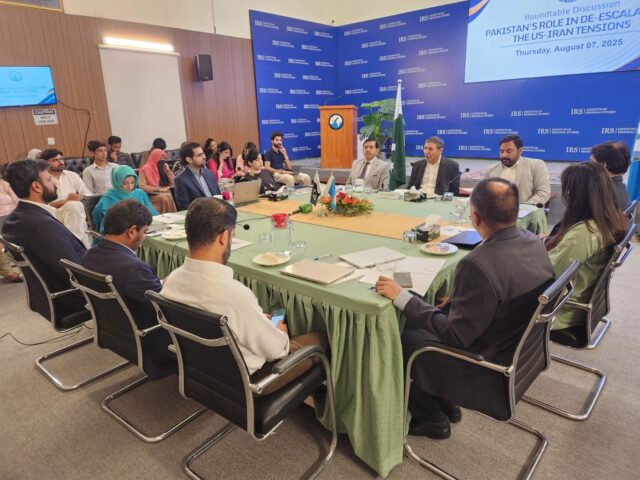
ISLAMABAD: For the US, Pakistan is a security guarantor and a stabilizing force in the region”, says Mr Naad e Ali, a Middle Eastern expert based in Washington D.C. He was speaking at a roundtable discussion hosted by Institute of Regional Studies, Islamabad. Mr Ali discussed how Pakistan gained strategic relevance in the eyes of President Trump. “President Trump praises the countries having strategic clarity”, he mentioned. Mr Ali argued that after the 12-day Iran-Israel war, the regime change objective of the US was transformed into containing Iran’s ideological reach and change regime’s behaviour. He further elaborated that any instability inside Iran would have a rippling effect on Pakistani side of Balochistan where the US was keen to explore rare earth minerals. Predicting the future US-Iran talks, Mr Ali argued that Pakistan could assume the role of a bridge builder in bringing Iran to the negotiating table.
Maj. Gen. (Retd.) Dr Samrez Salik highlighted Pakistan’s soft power engagement with Iran and its consistent role in de-escalating regional conflicts. He emphasized the importance of maintaining cordial ties with Iran suggested that Pakistan’s long-term strategic interests lie in regional stability. Maj. Gen (R) Samrez highlighted that Iran’s defiance of the US was the longest standoff by a regional actor against the superpower in modern history. Furthermore, drawing lessons from the past, he argued that Pakistan had a long-history of mediating between the rival and over the years its role had matured. He also suggested that Iran had to rethink about its regional policy vis-à-vis India due to latter’s close association with Israel.
Earlier, in his remarks, Ambassador Jauhar Saleem, President IRS, mentioned Iran’s nuclear capability was declared for peaceful purposes. “It is Pakistan’s long-standing and principled stance of supporting Iran’s right to peaceful nuclear technology”, Amb Jauhar stressed. He also emphasized that the revival of the Joint Comprehensive Plan of Action (JCPOA) was essential. Amb Jauhar praised Pakistan’s role of responsible diplomacy, adding that Islamabad once again acted as a stabilizing and mediating force in the regional crisis.

Ambassador of Ethiopia Calls on Governor KPK to Discuss Bilateral Cooperation

0

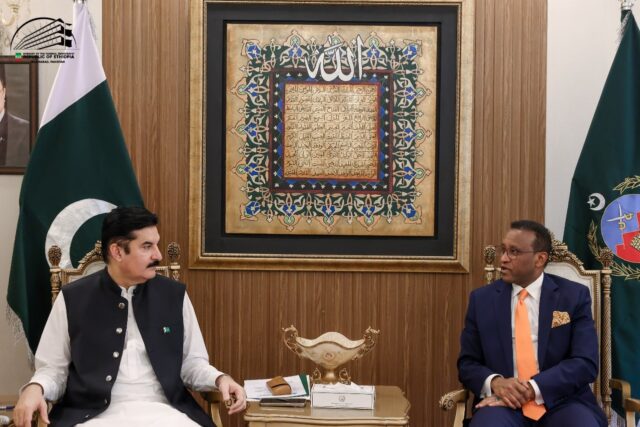
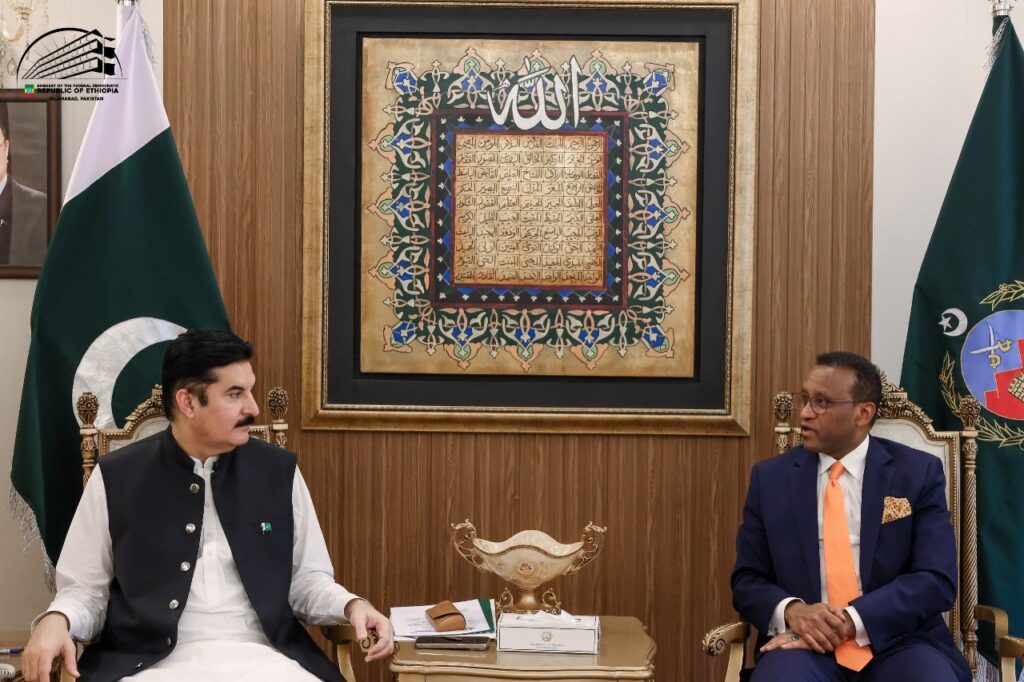
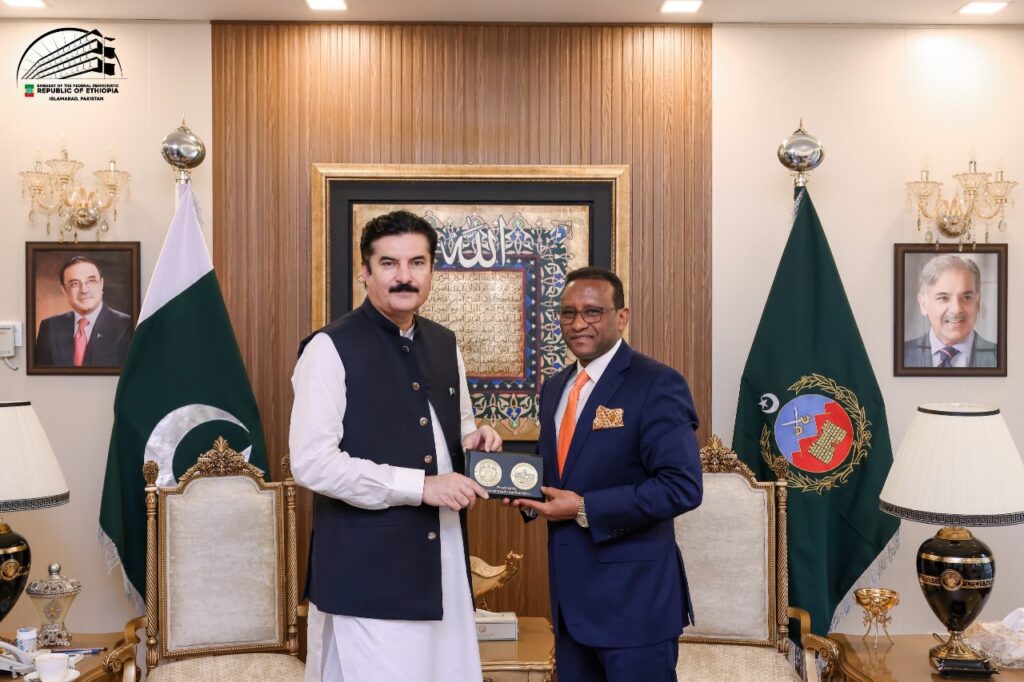
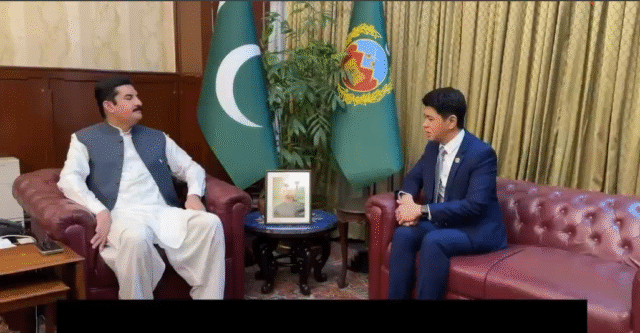
Islamabad:H.E. Dr. Jemal Beker Abdula, Special Envoy and Ambassador Extraordinary of the Federal Democratic Republic of Ethiopia, was called on H.E. Faisal Karim Kundi, the Honorable Governor of Khyber Pakhtunkhwa (KPK), at the Governor’s House in Islamabad to discuss bilateral cooperation across key sectors including trade, tourism, culture, and climate change.

​Both officials underscored the importance of fostering strong people-to-people relations through exchange of delegations in vital areas such as trade, investment, health, education, and forestry.
​Ambassador Dr. Jemal extended heartfelt condolences for the lives lost in Pakistan due to recent floods, emphasizing Ethiopia’s solidarity with Pakistan, a nation he noted is among the least contributors to climate change.
He also briefed the Honorable Governor on the Ethiopian Embassy Islamabad’s initiatives to raise awareness about environmental conservation and protection.
​The Ambassador highlighted the Government of Pakistan’s decision to twin its Green Pakistan Initiative with the Green Legacy Initiative of Ethiopia which is a brainchild of Ethiopian Prime Minister H.E. Dr. Abiy Ahmed.
He further elaborated on the expanding cooperation between the two countries, particularly in trade, investment, aviation, health, science and technology, and education.
​The Ambassador urged the Honorable Governor to mobilize the business community from Khyber Pakhtunkhwa for the 5th Pakistan-Africa Trade Development Conference & Single Country Exhibition (PATDC & SCE), for East African countries, scheduled for October 2025 in Addis Ababa, Ethiopia.
The Governor assured the Ambassador of his full support in mobilizing the business community for the exhibition. He also pledged to launch the Green Legacy Initiative in Khyber Pakhtunkhwa to raise awareness about climate change. The Governor highlighted Khyber Pakhtunkhwa’s strategic position as the “Gateway to Asia” and its immense potential for religious tourism, particularly its internationally significant Gandhara civilization.

Ethiopia, Pakistan Agree on Strengthening Parliamentary Cooperation

0

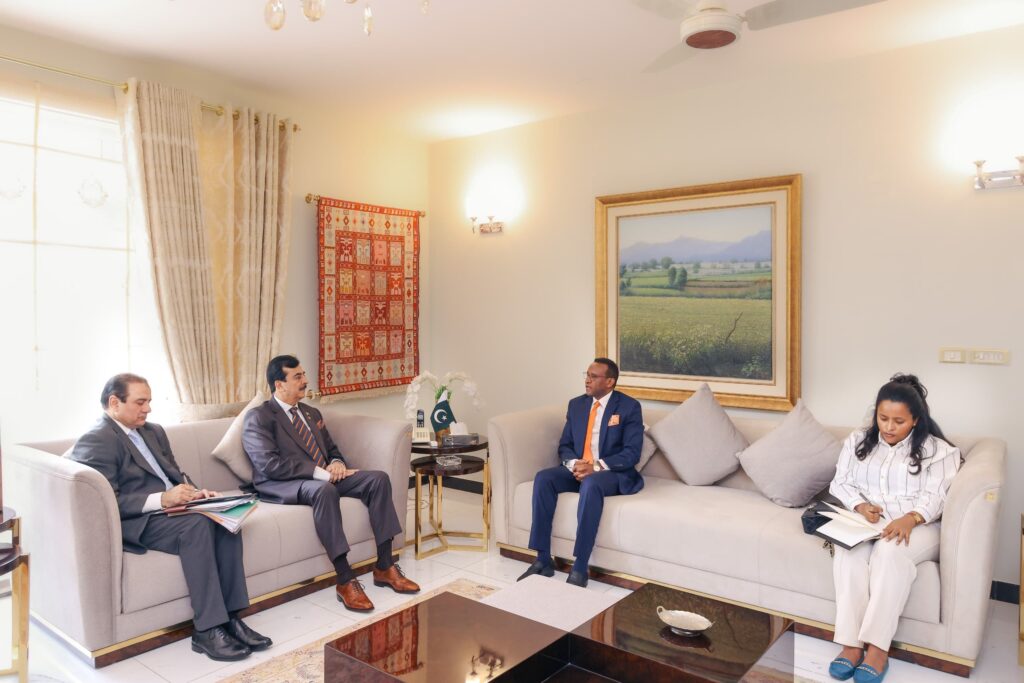
The Federal Democratic Republic of Ethiopia and the Islamic Republic of Pakistan on Friday agreed on the Parliamentary exchanges for further enhancing bilateral cooperation in diverse areas such as trade, investment, aviation, science and technology and climate change.
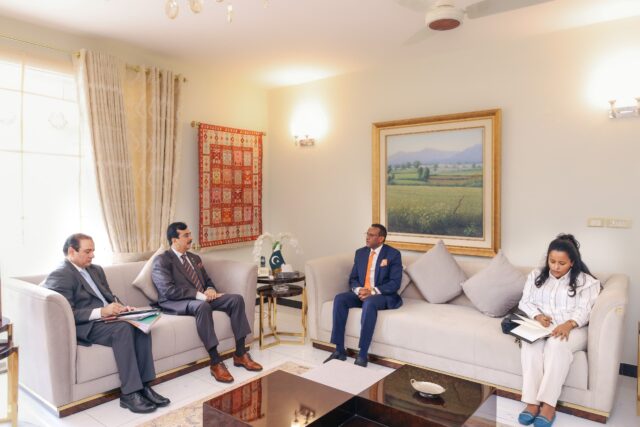
The crucial discussion to this end, held during a meeting between H.E. Dr. Jemal Beker Abdula, Special Envoy and Ambassador Extraordinary of Ethiopia to Pakistan and the Honorable Chairman Senate, H.E. Syed Yousuf Raza Gilani.
The two sides had an elaborate discussion on growing bilateral relations in various areas, and multilateral cooperation between the two countries for international peace and security.
H.E. Ambassador Dr. Jemal lauded the role being played by Islamabad for international peace and security.
He said Ethiopia looks forward to establish strategic partnership with Pakistan, highlighting the growing environmental cooperation of Ethiopia and Pakistan under the Green Legacy and Green Pakistan initiatives.
The Ambassador briefed the Honorable Chairman about the efforts made by the Ethiopian Embassy Islamabad and the Ministry of National Food Security and Research to twin the two landmark initiatives of the two nations including a Joint Green Legacy Forum that held at the National Agriculture Research Center, Islamabad recently.
The Ambassador highlighted the critical role of the Green Legacy Initiative of Prime Minister H.E. Dr. Abiy Ahmed in enhancing the green cover in Ethiopia to 23.6 per cent with plantation of over 40.5 billion seedlings in the last six years.
The Ambassador briefed the Honorable Chairman about the fresh impetus received by the bilateral relations with the opening of Ethiopian Embassy in Islamabad, commencement of Ethiopian Airlines operations in Karachi and delegations exchange between the two countries in diverse areas including trade, investment, health, education, tourism and culture.
Chairman Senate appreciated the efforts led by the Ambassador to foster bilateral cooperation in various areas especially environmental collaborations with various segments of society of Pakistan.
He acknowledged the outcomes of the Green Legacy Initiative in green economic development of Ethiopia.
Chairman Senate welcomed the launch of direct flights between Karachi and Addis Ababa, noting the significant potential for further collaboration in the aviation sector between Pakistan and Ethiopia.
Syed Yousuf Raza Gilani emphasized that Pakistan places great value on its relations with Ethiopia and remains committed to strengthening economic ties.
Chairman Senate invited his counterpart from Ethiopia to participate in an Inter-Parliamentary Speakers’ Conference, scheduled to be held in Pakistan this November.

From 1931 to Today: Kashmir’s Century old Fight for Freedom, Lives

0
file photo institute of regional study

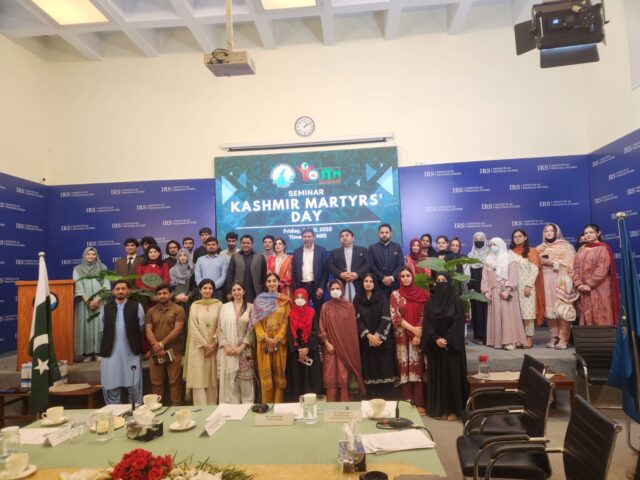
Islamabad– A powerful seminar commemorating Kashmir Martyrs’ Day held at Institute of Regional Studies, in collaboration with Youth Forum for Kashmir, echoed Kashmir’s unbroken resolve. The panelists honored the sacrifice of 22 innocent Kashmiris killed by Dogra forces on July 13, 1931—an event that ignited a century-long struggle for self-determination.
Ambassador Jauhar Saleem, President IRS highlighted that this solemn day is not merely a historical footnote but a living testament to the unwavering spirit of Kashmiris. From the brutality of the Dogra Raj to the militarization and recent demographic engineering under Modi’s regime, the Kashmiri people have never bowed before oppression.
Notable figures such as Ms. Mushaal Hussein Malik, Ms. Naseem Zehra, Dr. Qamar Cheema, Mr. Zaman Bajwa and Umair Khan emphasized that the struggle has endured through generations—from the Pathar Masjid uprising to the revocation of Articles 370 and 35A. Each phase of resistance faced India’s state terrorism, yet has only intensified the Kashmiri resolve.
“The recent four-day war victory of Pakistan over India has reignited hope among Kashmiris,” said Ms. Mushaal Malik, urging Pakistan to seize the moment and amplify Kashmiri voices on international platforms. She warned against India’s false-flag operations and ecological destruction in the name of development, calling the Vande Bharat initiative a “colonial strategy.”
Ms. Naseem Zehra highlighted India’s growing isolation due to its aggressive policies in the neighborhood. Conversely, China, Turkey, and Bangladesh support Pakistan. “The time for soft diplomacy is over,” she asserted. “Pakistan must recalibrate its strategy and project its stance globally.” The seminar called for the international community, especially the United Nations and the U.S., to take decisive action. “Kashmir is not just a regional issue; it’s a global flashpoint between two nuclear powers,” warned analyst Dr. Qamar Cheema.
The event concluded with a unified call for Kashmiris—whether in AJK or the diaspora—to raise for Kashmiris in IIOJK. “Kashmir’s story must be told by Kashmiris themselves,” urged Umair Khan, while advocating for global media engagement. Kashmir Martyrs’ Day is not just a remembrance—it is a declaration of Pakistan’s dedication for the right of self-determination of Kashmiris.

Governor KPK Met with Malaysian Deputy Head of Mission

0
Governor kpk Met with H.E Syafik Firdoos

ISLAMABAD: Governor Khyber Pakhtunkhwa Faisal Karim Kundi met with Malaysian Deputy Head of Mission H.E Muhammad Syafik Firdous at Governor House Peshawar. They’ve discussed enhancing bilateral cooperation in the fields of tourism, trade and investment. The Governor highlighted the natural beauty and resources of Khyber Pakhtunkhwa and invited Malaysian companies to invest. He appreciated Malaysia’s love for Pakistan and positive sentiments for Khyber Pakhtunkhwa.

ISSI concludes MoU with Uzbekistan’s leading think-tank

0

ISLAMABAD:(The News Mark) The Institute of Strategic Studies Islamabad (ISSI) hosted a delegation from Uzbekistan led by Mr. Eldor Sobirjonovich Tulyakov, Executive Director of the Development Strategy Center (DSC). Mr Rovshan Alimov, Deputy Ambassador of Uzbekistan in Pakistan, also attended the meeting.
Director General ISSI Ambassador Sohail Mahmood, in his welcome remarks, highlighted Pakistan’s ‘Vision Central Asia’ based on a comprehensive five-pronged framework that underpins Pakistan’s engagement with Central Asia — encompassing political and diplomatic engagement; trade and investment; energy and connectivity; security and defence; and people-to-people exchanges. He emphasized that Uzbekistan’s reform-driven openness and connectivity aspirations closely align with Pakistan’s own vision for regional integration. Noting the steady expansion of bilateral cooperation in trade, transport, and energy connectivity, he cited tangible progress under the Pakistan–Uzbekistan Strategic Partnership, Transit Trade Agreement, advancements toward regional connectivity through the Trans-Afghan Railway, and the growing momentum in business-to-business exchanges as encouraging indicators of deeper integration. He further underscored that the enduring cultural, religious, and spiritual affinities between Pakistan and Uzbekistan provide a strong civilizational foundation for strengthening historical linkages. In this context, he observed that the year 2026 will hold special significance for both countries, marking the 500th anniversary of the establishment of the Mughal Empire in the subcontinent by Zahir-ud-Din Babur, a native of Uzbekistan’s Ferghana Valley. Ambassador Sohail Mahmood also briefed the delegation on ISSI’s mission, vision, and ongoing activities and stressed the importance of expanded think-tank and academic exchanges between Pakistan and Uzbekistan.
Executive Director Tulyakov, in his remarks, acknowledged the deep bonds of history, faith, culture, and shared traditions between Pakistan and Uzbekistan, while highlighting the steadily expanding scope of bilateral cooperation. He lauded the strategic partnership between the two countries as a vital foundation for further elevating the relationship to new heights and appreciated Pakistan’s generous offer of access to its seaports as a significant facilitative step for enhancing Uzbekistan’s trade connectivity. While outlining the contours of people-centric development currently underway in Uzbekistan, he proposed further broadening of the ambit of cooperation between the two countries by focusing on improved air connectivity, expanded academic and scholarly exchanges, and the promotion of tourism.
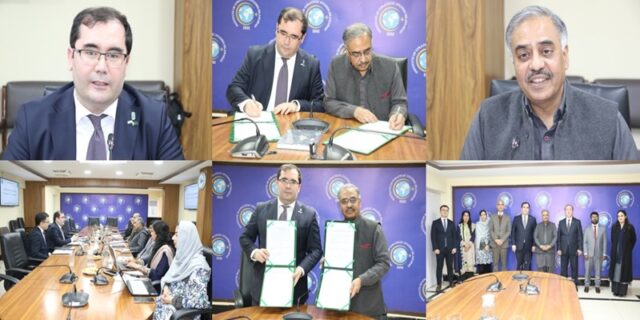
The talks were followed by the signing of a Memorandum of Understanding between ISSI and DSC aimed at fostering joint research initiatives, expert exchanges, collaborative publications, and sustained academic engagement.

IRS Hosts Book Launch Showcasing Uzbekistan’s Reform Journey and Pak–Uzbek Partnership

0

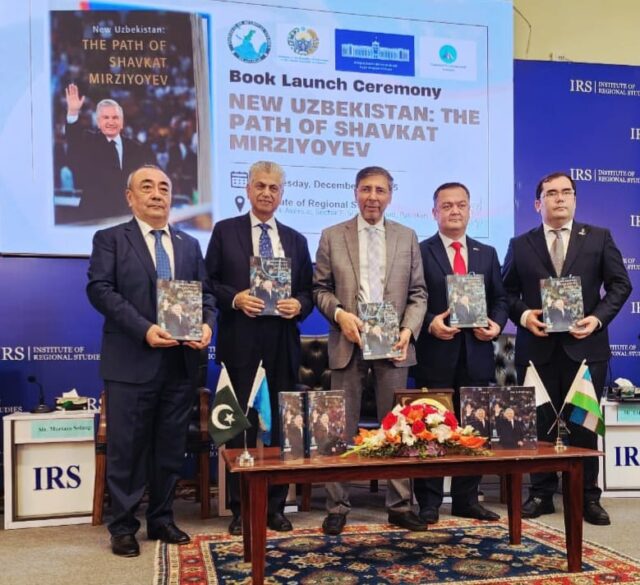
ISLAMABAD:(The News Mark) The Institute of Regional Studies (IRS), Islamabad, in collaboration with the Embassy of Uzbekistan, hosted a book launch ceremony for New Uzbekistan: The Path of Shavkat Mirziyoyev, bringing together diplomats, policymakers, scholars, and members of civil society. The event underscored Uzbekistan’s reform-driven transformation under President Shavkat Mirziyoyev and highlighted the deepening partnership between Pakistan and Uzbekistan.
Ambassador Jauhar Saleem President IRS termed the book an intellectually rich and well-articulated account of Uzbekistan’s reform trajectory. He described the launch as a meaningful diplomatic and intellectual moment between two brotherly nations, bound by shared faith, history, culture, and civilizational ties. Highlighting Uzbekistan’s emergence as a regional hub since independence, he noted that the book goes beyond political narrative to present a profound reflection on leadership anchored in service to the people.
Ambassador of Uzbekistan to Pakistan, Ambassador Alisher Tukhtaev, stated that Uzbekistan has entered a new era of growth marked by comprehensive reforms across governance, economy, science, and development. He noted that President Shavkat Mirziyoyev’s leadership has renewed public confidence in the country’s future, reflected in tangible economic gains, including an increase in GDP from USD 115 billion to USD 140 billion and foreign exchange reserves from USD 48 billion to USD 59 billion.
Highlighting bilateral relations, Ambassador Tukhtaev described Pakistan and Uzbekistan as genuine partners bound by a long-term cooperation framework and mutual trust. He noted positive developments such as visa facilitation for Pakistani nationals through e-visa regimes, expanded direct flight connectivity between Tashkent and Islamabad and Lahore, with Karachi to be added next year, and growing trade volumes expected to rise from USD 404 million in 2024 to USD 450 million this year.
Mr. Hassan Irmatov, Member of the Senate Committee of Uzbekistan, described the book as a leadership-oriented and analytical work that provides insights into contemporary governance and state transformation. Recalling the book’s earlier launches in the United States and at the United Nations Headquarters, attended by senior lawmakers, UN officials, and civil society representatives, he termed the Islamabad launch an important milestone in the book’s growing international outreach and a reflection of strengthening Pak–Uzbek relations.
Mr. Eldor Tulyakov, Executive Director of the Development Strategy Center, elaborated on the profound transformation of Uzbekistan’s public administration over the past eight years. He emphasized that governance reforms have redefined the relationship between the state and citizens, placing human dignity at the center of policymaking. Transparency, participatory budgeting, institutionalized accountability, and service-oriented governance were highlighted as key pillars of reform.
Spokesperson to President of Pakistan and former Information Minister, Mr. Murtaza Solangi, emphasized the deep cultural, historical, and geographical affinities between Pakistan and Uzbekistan. He noted that the two countries are connected by shared heritage, linguistic similarities, and close physical proximity, with vast untapped potential for cooperation in education, agriculture, technology, culture, and trade. He described Uzbekistan’s reform momentum as a “third renaissance” rooted in history, driven by openness, innovation, and a youthful demographic, stressing that enhanced regional connectivity with Central Asia is both timely and necessary.
The event was well attended by senior diplomats, government officials, scholars, journalists, and students.

Experts emphasize effective implementation of national security policies

0

ISLAMABAD:(The News Mark) Participants of a roundtable discussion emphasized the need for effective implementation of national security policies and developing a sustained narrative against terrorist violence. They were speaking at a roundtable discussion on the evolving counterterrorism response of Pakistan and the challenges of cross-border terrorism organized by the Institute of Regional Studies (IRS) in the backdrop of the 11th anniversary of the terrorist attack on the Army Public School (APS) in Peshawar in December 2014.
President IRS Ambassador Jauhar Saleem termed the 2014 APS tragedy a defining moment in Pakistan’s history which paved the way for formulation of the National Action Plan (NAP) with a political consensus. He called for countering the terrorists’ propaganda through a sustained counter-terrorism narrative.
Former National Coordinator NACTA Mr Ihsan Ghani Khan highlighted the gaps in implementation of various good policy documents, including NAP. He maintained that tactical counterterrorism had a limited scope and needed to be bolstered by strategic counterterrorism that included well-thought-out policymaking and effective policy implementation. He added that since terrorism was a crime, the law enforcement mechanisms needed to be strengthened through the revamping of the criminal justice system which was also the last point in NAP.
Pakistan’s former Special Representative for Afghanistan Ambassador Asif Ali Durrani also called for adopting a unified national narrative against terrorism. He urged the strengthening of the police force as first responders in countering terrorism and called for better interagency coordination among various government agencies and departments dealing with counterterrorism.

The Founder and Editor of The Khorasan Diary Mr Iftikhar Firdous said that even though APS was a tragedy in scale and scope, Pakistani policymakers needed to take even attacks targeting the school buildings and not the schoolchildren seriously because in doing that the terrorists were targeting symbols of education in the country. He called for better governance in the merged districts of Khyber Pakhtunkhwa to counter terrorism in those areas.
The Executive Director of the Centre for Law and Security (CLAS) Mr Rehman Azhar said that Pak-Afghan border has certain unique characteristics that need to be considered when devising border security strategies. He also called for implementation of NAP and an effective counter-narrative strategy against terrorism, especially in the two provinces most affected by it. In addition, he also called for seriously addressing the terror and crime nexus in the country.
The Lead of the Afghanistan Program at IRS Mr Aarish U. Khan said that the coming into power of the Taliban government in Afghanistan had necessitated a fresh look at the drivers of terrorism in Pakistan’s bordering areas with Afghanistan.

ISSI holds Bilateral Think Tank Dialogue with Shanghai Institutes of International Studies (SIIS)

0

Islamabad, (The News Mark) The Institute of Strategic Studies Islamabad (ISSI) hosted Bilateral Dialogue with China’s premier think-tank, the Shanghai Institutes for International Studies (SIIS). The thematic focus of the Dialogue was “Strengthening Think Tank and Academic Exchanges Between China and Pakistan and Deepening the All-Weather Strategic Cooperative Partnership.”
The Dialogue was attended by a high-level Chinese delegation comprising Prof. Chen Dongxiao, President, SIIS; Prof. Liu Zongyi, Senior Research Fellow and Director, Centre for South Asia Studies, SIIS; Dr. Tan Chenyi; and Dr. Zhang Xiaoyin, Research Fellows at SIIS, along with Mr. Shi Yuanqiang, Deputy Head of Mission, Chinese Embassy in Islamabad, while the speakers from Pakistani side included Ambassador Masood Khalid, Ambassador Zamir Akram, and Ambassador Asif Durrani, reflecting the depth and diversity of Pakistan’s scholarly and policy engagement in advancing China–Pakistan cooperation. Mr. Ishtiak Akil, DG(China) at the Foreign Office, also joined.
The meeting focused on deliberations over recent developments in China–Pakistan relations, the evolving U.S. global engagement, regional dynamics, and developments vis-a-vis Afghanistan.
In the opening remarks, Director General ISSI Ambassador Sohail Mahmood highlighted the enduring strength of the all-weather Pakistan–China strategic cooperative partnership, describing it as a cornerstone of Pakistan’s foreign policy and a stabilizing force for regional peace and shared prosperity. He underscored the deep strategic convergence between the two countries, particularly through CPEC, the Belt and Road Initiative, and support for China’s Global Development, Security, Civilisation, and Governance Initiatives. He emphasized that Pakistan’s close partnership with China complements its broader foreign policy of constructive engagement, inclusive regionalism, and support for a fair, equitable and cooperative multipolar world order. Ambassador Sohail Mahmood reaffirmed Pakistan’s commitment to peaceful coexistence, dialogue, and regional stability, while safeguarding its sovereignty and core national interests. He expressed confidence that enhanced think-tank collaboration between ISSI and SIIS would generate valuable insights to further strengthen Pakistan-China relations as both countries approach the 75th anniversary of diplomatic ties.
Prof. Chen Dongxiao in his remarks said that the Pakistan–China strategic partnership has become even more vital amid profound global change and growing challenges to international order. He reaffirmed China’s strong interest in peace, stability, and development in South Asia, describing Pakistan as a trusted strategic partner. He highlighted the importance of deepening people-to-people, academic, and think-tank cooperation as a key pillar of bilateral relations. Prof. Chen expressed confidence that closer collaboration between SIIS and ISSI would make a positive contribution to regional stability and a more cooperative global order.
Earlier, Dr. Talat Shabbir, Director, CPSC, delivered introductory remarks and moderated the working sessions. He highlighted the value of the ISSI–SIIS academic partnership in strengthening long-term intellectual cooperation.
The Dialogue concluded with closing remarks and a vote of thanks by Ambassador Khalid Mahmood, Chairman, Board of Governors, ISSI, who appreciated the SIIS delegation’s valuable contributions and expressed confidence that sustained think-tank engagement would further strengthen Pakistan–China ties and promote shared goals of peace, cooperation, and regional stability.

Fossil fuel consumption continues to dominate global energy use, while non-fossil sources remain far lower.Amb Jauhar

0

ISLAMABAD :(The News Mark) The Institute of Regional Studies (IRS) convened the inaugural post-COP30 seminar to examine the outcomes of the UN climate conference held in Belém, Brazil, and its implications for Pakistan and other climate-vulnerable countries.
Ambassador Jauhar Saleem opened the discussion by highlighting Pakistan’s disproportionate exposure to climate risks despite contributing less than 1% to global greenhouse gas emissions. He spoke about shrinking glaciers, increased water scarcity, deforestation, and worsening air pollution. He noted that cities like Lahore now rank among the most polluted globally. He also emphasized that fossil fuel consumption continues to dominate global energy use, while non-fossil sources remain far lower. While acknowledging Pakistan’s progress in solar energy, especially micro-solar initiatives, he stressed that resilience alone is insufficient without measured finance and implementation.

Ms. Zainab Naeem, Associate Research Fellow, SDPI, described COP as an important diplomatic space shaped as much by politics as by science. She highlighted discussions on transitioning away from fossil fuels, deforestation, and mitigating black carbon, a short-lived but highly dangerous pollutant from biomass and crop residue burning.Hamza Haroon, Regional Director of South Asia for Climate Vulnerable Forum (CVF-V20) focused on climate finance and adaptation and highlighted the mismatch between climate losses and available funding. He noted that while new financing windows offer USD $150 to 250 million, these amounts are inadequate compared to losses from climate disasters worth tens of billions.
Tahanyat Satti, negotiator at UNFCCC, stressed the importance of continuity in negotiations and warned that frequent changes in negotiators weaken developing countries’ positions.

The event was moderated by Talha Tufail Bhatti, ARO Climate Governance, Policy and Food Security Program. He highlighted that post-COP discussions are critical to connect global climate commitments with local realities.

Dialogue on China’s Path to Development and Modernization: Lessons and Opportunities for Pakistan

0

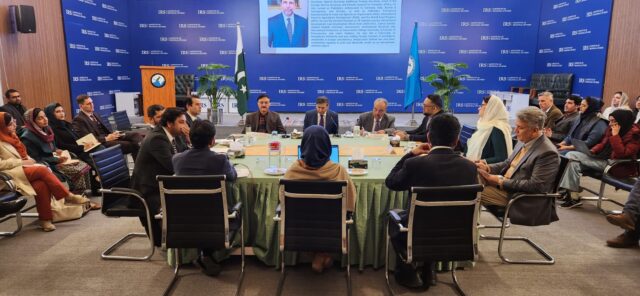
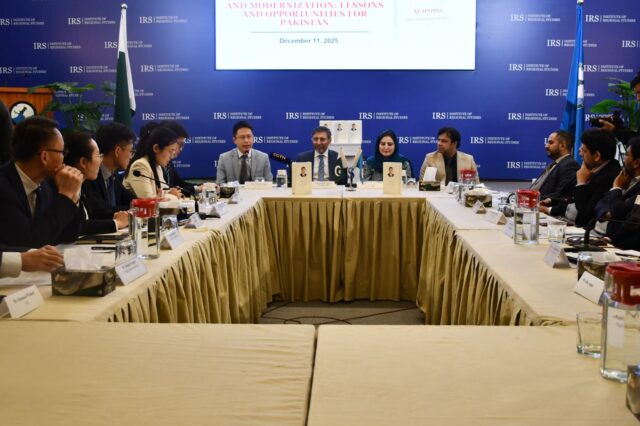
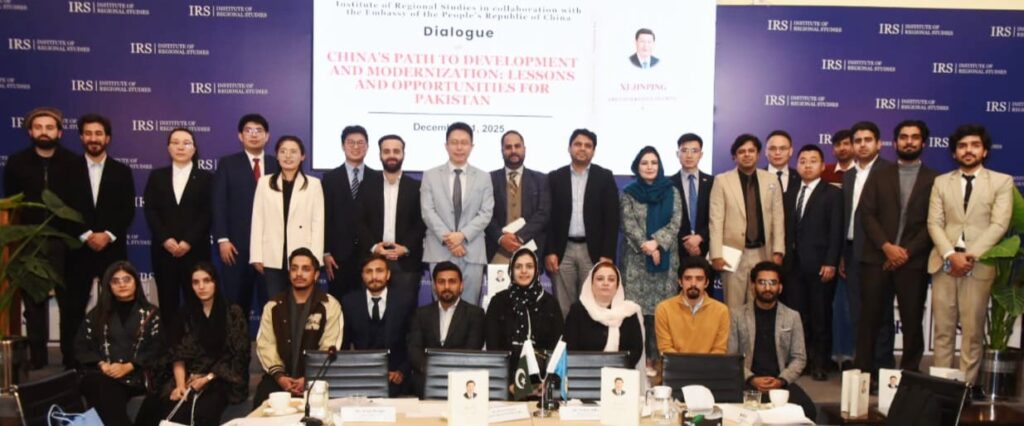
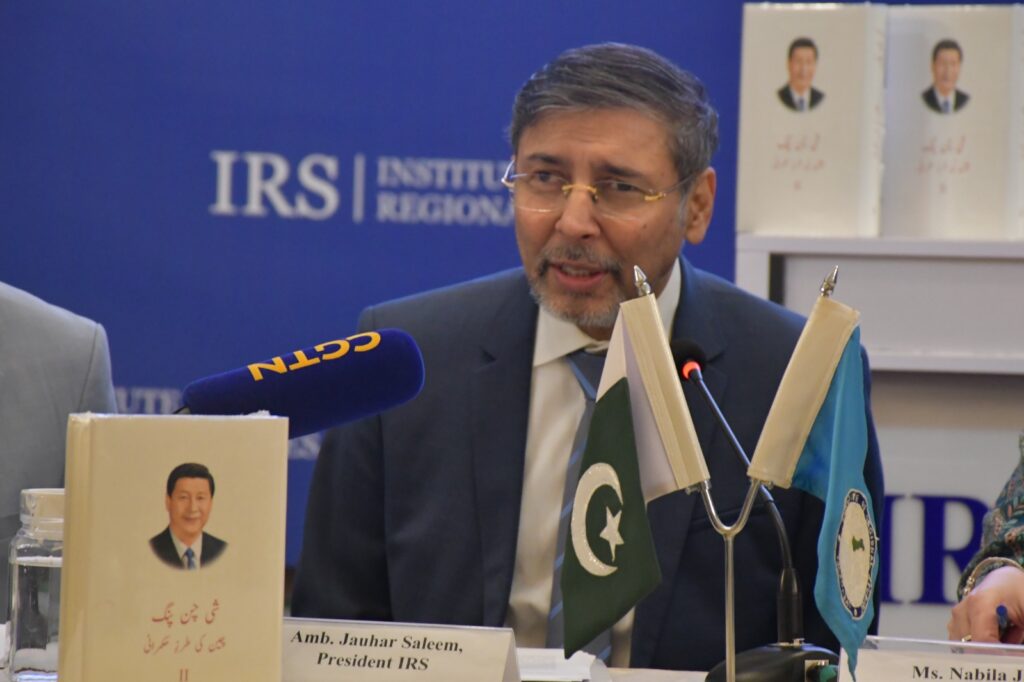
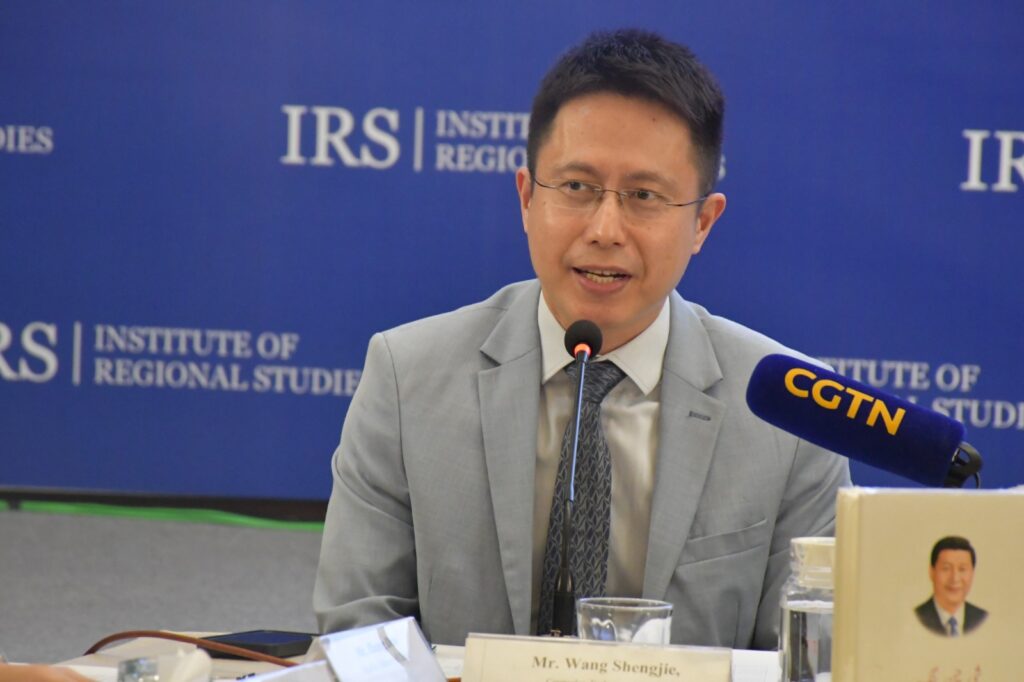
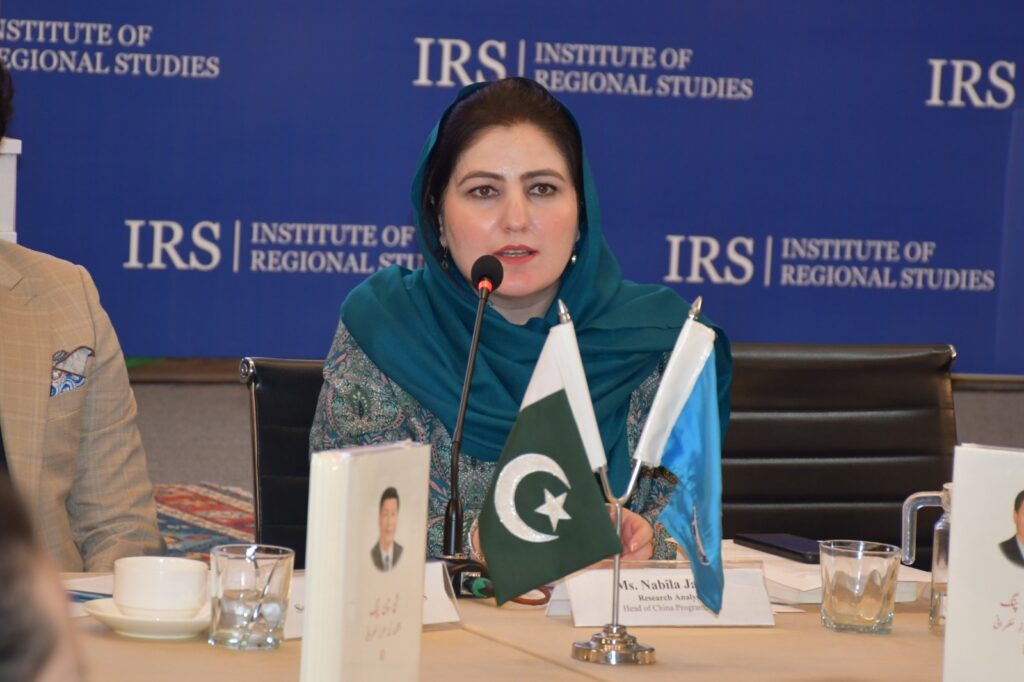
ISLAMABAD :The Institute of Regional Studies (IRS), in collaboration with the Embassy of the People’s Republic of China, hosted a dialogue on “China’s Path to Development and Modernization: Lessons and Opportunities for Pakistan.”

The event featured young diplomats from the Embassy of China, led by Mr. Wang Shengjie, Counselor and including Mr. Zhang Duo, Attaché; Mr. Yang Taofei, Attaché; Ms. Wang Yiqiu, Third Secretary; Mr. Li Zhen, Third Secretary; Mr. Zhang Datuo, Second Secretary; Ms. Jiang Lezan, Third Secretary; and Mr. Zhang Pengfei, Attaché. Other panelists included Dr. Usman Chohan, Mr. Zeeshan Ahmed, Dr. Furqan Rao, Dr. Mehmood Hassan, Mr. Tahir Dhindsa, Barrister Zopash Khan, Mr. Assadullah Khan, young and emerging scholars and influencers who exchanged views with the delegates, aimed at deepening understanding on the development, governance of China and exploring opportunities in China’s modernization drive 2035; as well as the targets to be achieved with another very effective Five-Year Plan 2026-2030 focused on high-quality development, self-reliance in technology, boosting of domestic consumption and opening wider for global business and exchanges.

Ambassador Jauhar Saleem, President IRS, delivered the opening remarks, highlighting China’s remarkable achievements in poverty alleviation, economic growth, and modernization. He noted that China’s national strategies, particularly its Five-Year Plans, provide valuable lessons for developing countries such as Pakistan seeking sustainable and equitable development.

A central feature of the dialogue was the display and discussion of the Fifth Volume of “Xi Jinping: The Governance of China.” Published in July 2025, the volume compiles 91 speeches and writings of President Xi Jinping from May 2022 to December 2024, along with photographs documenting key moments of governance. Divided into 18 thematic sections, the book presents China’s defining features of modernization, its practical pathways, and achievements under the leadership of the Communist Party of China (CPC). The earlier series, already translated into more than 40 languages and distributed in over 180 countries, continues to shape global understanding of China’s governance philosophy. Since China’s development has evolved, so has its role in the world, and the new editions of President Xi’s work provide the guidance, ideas, and inspiration accordingly.The delegation shared perspectives on China’s people-centric diplomacy, people-centered governance, the four initiatives, the Belt and Road Initiative, and reforms in the Communist Party of China (CPC). They emphasized that China’s development model is rooted in inclusivity, self-reform, and cultural harmony, while initiatives such as CPEC continue to serve as vital pillars of Pakistan-China friendship.

Notable Pakistani experts, scholars, and educationists contributed their views on governance, policymaking, and business opportunities. They underscored the importance of consistency in national policies, competence-based education, and people-centric approaches to development. The dialogue also explored how Pakistan could benefit from China’s experience in long-term planning, inclusive policymaking, and technological investment.

The session concluded with a reaffirmation of the enduring Pakistan-China partnership and the shared commitment to modernization, cultural exchange, and mutual progress.

Pak-Türkiye to enhanced Cooperation in Aviation, Defence, High-Tech Industries

0

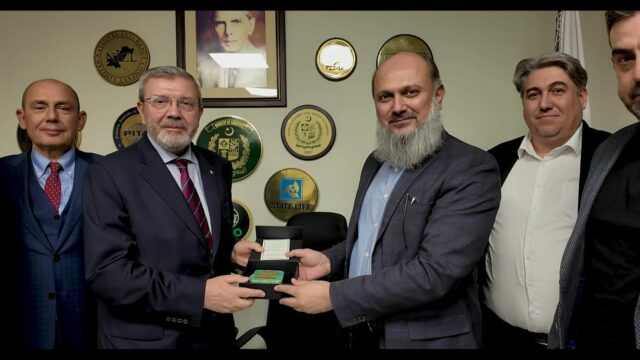
ISLAMABAD : (The News Mark) A high-level delegation from the Republic of Türkiye, led by Ahmet Khan, Group CEO and Honorary Investment Counselor of Pakistan in Türkiye, called on Federal Minister for Commerce, Jam Kamal Khan.

The delegation comprised senior professionals representing Türkiye’s aviation, aircraft manufacturing, aerospace engineering, drone technology, defence systems, automotive engineering, and advanced materials sectors.

They conveyed strong interest in pursuing joint ventures, technology transfer, and establishing manufacturing capabilities in Pakistan.

The Turkish side briefed the Minister on Türkiye’s rapidly advancing aviation and defence industries.

They also noted existing international collaborations and expressed willingness to expand such partnerships through Pakistan.

Jam Kamal Khan welcomed the delegation and reaffirmed Pakistan’s commitment to deepening industrial and economic ties with Türkiye.

He highlighted the long-standing people-to-people goodwill between the two nations and emphasized the significant potential for cooperation in aerospace, defence production, minerals development, and dual-use manufacturing, supported by Pakistan’s engineering base and rich critical mineral resources.

The Minister encouraged Turkish companies to view Pakistan as a strategic production and export partner for regional and global markets, including ASEAN, Africa, the Gulf, and South Asia.

He underscored the value of exploring trilateral and multilateral partnerships leveraging the strengths of both countries.

He also briefed the delegation on Pakistan’s ongoing initiatives, such as the development of an expanded new Expo Centre in Karachi and increased coordination between the Ministry of Commerce, Ministry of Defence Production, and national technology institutions.

The Turkish delegation appreciated Pakistan’s strategic vision and expressed readiness to pursue long-term cooperation across aviation, defence manufacturing, engineering, and advanced materials.

They also showed interest in strengthening banking and trade facilitation mechanisms to support future collaboration.

The meeting concluded with both sides agreeing to advance sector-specific engagements, support B2B linkages, and explore investment-led industrial partnerships to boost bilateral trade and technological cooperation.

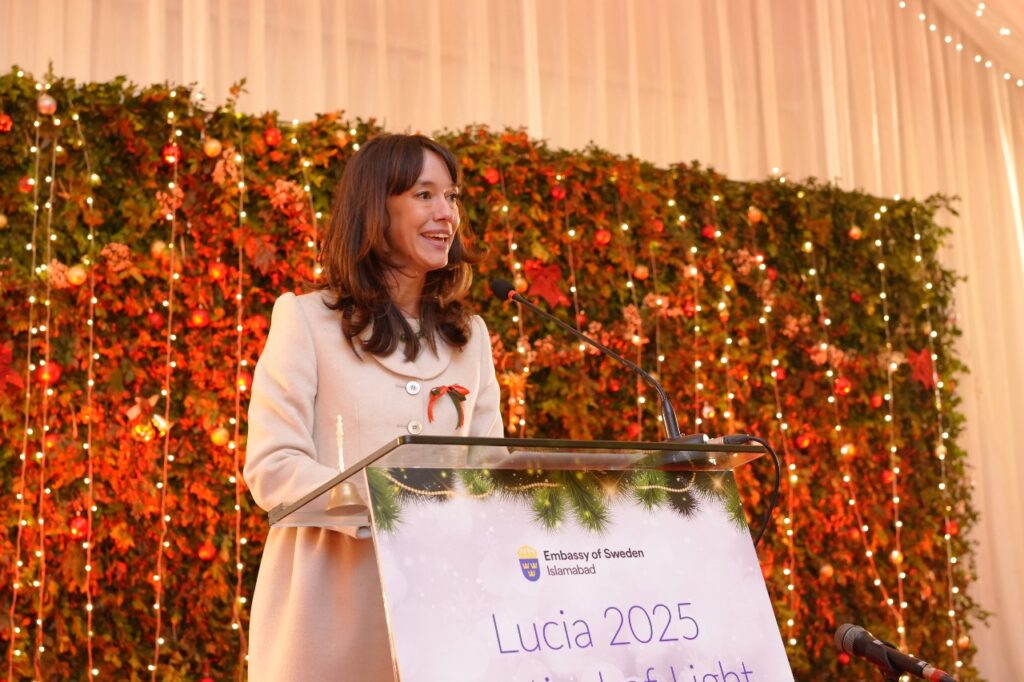
Swedish Embassy hosts reception on the occasion of Lucia Day, A Festival of Light and Culture

0

Islamabad :  (The News Mark) Ambassador of Sweden to Pakistan,  Alexandra Berg von hosted the End of the Year Partners Reception and Lucia celebration at the Sweden Embassy.
The celebration marked the beginning of the festive season with music, candles, and the timeless spirit of hope and togetherness.
Rooted in over 400 years of history, the Lucia tradition holds a special place in Swedishhearts and culture as it celebrates the arrival of light in the darkest time of the year.
Each December, processions of candle-bearing singers dressed in white gently usher in light. The custom, linked to Saint Lucia’s Day, symbolizes warmth, hope, and peace
and the triumph of light over darkness.
The highlight of the evening was the Lucia procession, where participants from the wider Swedish and Nordic community sang traditional Swedish songs while carrying candles, creating a warm and festive atmosphere.
Speaking at the event, Ambassador of Sweden to Pakistan,  Alexandra Berg von Linde said: “Lucia is more than a tradition. It is a reminder of the light we can bring to one another, especially in challenging times. By sharing this celebration with our friends in Pakistan, we hope to offer a glimpse into Swedish culture, where community, openness, and compassion are at the heart of society. I am thankful for the friendships and goodwill that continue to grow between our communities.”

This year’s celebration also featured the “Sweden in General – Sverige A–Ö” exhibition, giving guests an opportunity to explore everyday life in Sweden through the  Swedish alphabet. The exhibition contained striking visuals and stories and touched on themes reaching from innovation and equality to nature, education, and design,  highlighting the country’s values and culture.
The evening concluded with Swedish seasonal treats including delicious saffron buns,  gingerbread cookies, traditional meatballs and other delicacies, giving everyone a true
taste of Sweden.
By celebrating Lucia in Islamabad, the Embassy hopes to share a piece of Swedish culture and create opportunities for our communities to connect, build friendships, and
deepen cultural understanding.
Embassy of Sweden in Pakistan

Abu Jee by Dr. Talat Shabbir: A Tribute to a father’s love and legacy

0

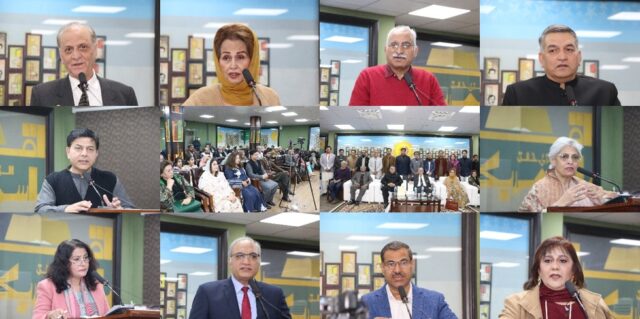
ISLAMABAD, (The News Mark) December 10, 2025, The book event of Abu Jee, a poignant memoir by Dr. Talat Shabbir, was held, bringing together an audience of literary enthusiasts, friends, and family to celebrate the emotional and touching tribute to a father’s love and legacy.
Held on December 10, 2025, at Pakistan Academy of Letters, Islamabad, the event was attended by notables from the literary and civil society communities. The ceremony featured reflections from individuals of diverse backgrounds followed by a reading by Dr. Talat Shabbir, where he shared intimate excerpts from his book, moving the audience with his deep reflections on the bond between a father and son.
In Abu Jee, Dr. Shabbir paints a vivid picture of the powerful and unbreakable connection between him and his father, Shabbir Hussain Bhatti. The book is a rich collection of memories, reflections, and profound thoughts. Through the pages of this book, Dr. Talat Shabbir delves into the everyday experiences that shaped his upbringing, the lessons drawn from both struggles and joys, and the ultimate realization of the irreplaceable presence of a father in his life.
One of the central themes of Abu Jee is the author’s contemplation on the inevitability of separation caused by death. Dr. Shabbir uses his father’s passing as a catalyst to explore not just grief, but the beauty in remembering and cherishing those who leave us. Through moving accounts of events, Dr. Shabbir shows that love transcends death, leaving behind memories that continue to stay and inspire. The title of the book, Abu Jee, reflects the affectionate way the author refers to his father carrying profound respect and emotional attachment. The narrative not only captivates the readers but also highlight the universal themes of love and loss.
Dr. Maqsood Jaffri, Mrs. Farrukh Khan, Dr Najeeba Arif, Hameed Shahid, Abdullah Hameed Gul, Saeed Raja, Dr Farhat Jabeen Virk, and Dr Mahnaz Anjum spoke on the occasion reflecting on the narrative of fond memories of the author. The event was moderated by noted educationist Dr Sher Ali.

“Russia has no aggressive plans toward Europe. However, Russia’s enemies should not forget that we have advanced weapons, including recently tested non-nuclear weapons. Our country is prepared to respond firmly and decisively.”Amb Albert P Khorev,

0

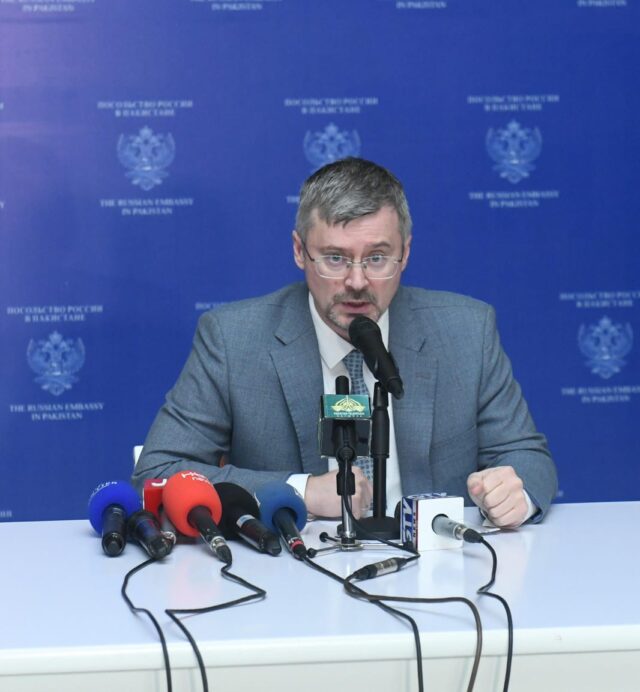
ISLAMABAD ,(The News Mark) December 11, 2025 Russian Ambassador Albert P. Khorev held a media briefing today , outlining Moscow’s position on the ongoing Ukraine conflict, recent negotiations, and the international community’s role. Addressing journalists, the envoy highlighted key developments since the last engagement with the press, stressing Russia’s commitment to a diplomatic resolution while criticizing Ukraine and its Western allies for what he described as obstructionist policies.
One of the most pressing issues in resolving the conflict in Ukraine is the December 3 meeting in Moscow between Russian President Vladimir Putin and American negotiators Steve Witkoff and Jared Kushner. The parties engaged in extensive, five hour’s discussions regarding the peace plan proposed by US President Donald Trump, which is based on the agreements reached by the Russian and US presidents at the summit in Anchorage on August 15.
This plan, which was outlined following the meeting in Alaska, underwent significant changes after a few rounds of shuttle diplomacy between the U.S. on the one hand and Europe and Ukraine on the other. The meeting in Moscow was constructive, very useful and substantive, although it also touched upon issues that Russia disagrees with.
Overall, efforts to reach a negotiated solution to the Ukrainian crisis are proving difficult. The Trump administration, acting constructively and based on the realities on the ground, faces opposition from Europeans who still seem to harbor illusions about the possibility of inflicting a “strategic defeat” on Russia and ending the conflict on their terms.
In this regard, the so-called “children’s issue” is being actively exploited. The West accuses Russia of kidnapping “thousands” of Ukrainian children – a claim that was proven to be completely unfounded during direct Russian-Ukrainian negotiations held this summer. During specific discussions, the Ukrainian delegation was unable to provide a list of even one thousand Ukrainian children “kidnapped by the Russians”. Russian negotiators received a list with the names of only 339 children, allegedly evacuated to Russia from the conflict zone. Substantive work on the return of evacuated minors to Ukraine is being carried out by the Office of the Presidential Commissioner for Children’s Rights, Maria Lvova-Belova.
Against the backdrop of ongoing efforts to resolve the Ukrainian crisis through diplomatic means, the EU’s relentless attempts to invent new quasi-legal structures, such as the so-called “Register of Damage to Ukraine,” the “International Claims Commission for Ukraine,” and the “Special Tribunal for Crimes of Aggression against Ukraine.” Any decisions made by these bodies will be considered null and void by our country, and any actions by third countries in support of them will be perceived by Russia as a hostile move and will receive an adequate response. We hope that sensible states, not willing to follow the lead of the Russophobic Western group, will give an objective assessment of these harmful European initiatives and will not allow themselves to be drawn into neocolonial projects.
Behind these pseudo-legal formats lie the Europeans’ desire to justify the Kiev regime’s material claims against Russia and to create an “information background” for the theft of Russian sovereign assets frozen in the West. The Kiev regime, suffering one setback after another on the front lines and long dependent on its Western patrons, is facing a colossal funding shortfall. European sponsors, having spent billions of their taxpayers’ money, are also in a difficult financial situation.
Their situation is so difficult that they are actively discussing the option of seizing Russian sovereign assets held in European financial institutions. There is no other word for these plans: it’s theft. In this regard, I would like to emphasize that stealing Russian funds will not change the course of the conflict and will not prevent Russia from achieving the goals of the Special Military Operation, but it will lead to severe consequences for Western financial institutions and individuals responsible for the thievery. The former European colonial powers will not be able to seize resources with impunity, as they did in the past.
It is remarkable how eagerly Europeans intend to continue pouring billions of dollars into the rotten, corrupt Kiev regime, which usurped power in May 2024 and, using the pretext that it is necessary to continue the war with Russia, is holding on to this power in Ukraine for the sake of personal enrichment. This has now become a wellknown fact following the results of a recent corruption investigation in Ukraine. Evidence of the embezzlement of $100 million in the Ukrainian energy sector is just the tip of the iceberg, representing only what has been proven. The dismissal of Ukrainian Justice Minister German Galushchenko, Energy Minister Svetlana Grinchuk, and Presidential Office Head Andrey Yermak are Zelensky’s attempts to shift the blame onto others. However, it is clear that all the evidence points to Zelensky himself, as indicated by the involvement in the scandal of his close associate Timur Mindich, who fled the country shortly after the case made headlines.
Naturally, without Zelensky knowing, his closest circle, namely Yermak and Mindich, couldn’t have pulled off their multi-million dollar corruption schemes. The full scale of these operations has yet to be determined, but based on the facts already established—such as the golden taps and toilets, as well as cash-filled travel bags found during a search of the home of Zelensky’s business associate Mindich — it is clear that the embezzlement was not limited to 100 million dollars.
However, the Kiev regime’s European patrons are carefully turning a blind eye to its corrupt nature, continuing to support their protégés. New packages of sanctions against Russia keep coming. Let me highlight that all the invasive financial measures taken by Western countries in recent years have already had a major negative impact on the instigators themselves and on the global economy at large. Illegitimate Western sanctions have dealt a blow to international production and supply chains. This has caused an imbalance in investment and trade flows, exacerbated the debt problem, reduced access to goods, services, finance, and technology for many countries, and undermined the principles of fair competition. In addition, these measures have slowed down global economic development (according to the IMF, global GDP growth did not exceed 3.2% in 2024).
According to IMF estimates, relatively high GDP growth rates over the past year were recorded only in the US – 2.8%. In Germany, France, Italy, the UK, Japan, and Canada, GDP growth rates fluctuated around zero or fell below zero.
The European Commission has been forced to admit that it was the severing of energy cooperation with Russia that made it impossible for the EU’s largest manufacturers to remain competitive. As a result, the industrial sector, especially its energy-intensive sectors, found itself in a challenging predicament. The energy crisis and poorly thought-out decarbonization policies risk ending up in deindustrialization for Europe.
These losses are just the tip of the iceberg when it comes to the cost of trying to use economic blackmail against Russia. The long-term consequences for the collective West (including reduced use of the dollar and euro in international transactions and the creation of new trade infrastructure beyond Western control, such as international transport corridors and production and distribution chains) have yet to be assessed.
Overall, one can already say that the pre-planned and deliberately instigated conflict in Ukraine has led to the definitive collapse of the Euro-Atlantic security model based on NATO, the OSCE, and the European Union. There are now growing calls for consideration of a new European, or to be more precise, Eurasian security system.
Back in 2015, at the Russia-ASEAN summit, Russian President Vladimir Putin proposed to form a Greater Eurasian Partnership, which envisages a pan-continental framework for equal and mutually beneficial cooperation through the expansion of trade and economic ties and harmonization of integration processes, including those within the CIS, SCO, EAEU, ASEAN, GCC, and other groups. And just over a year ago, Vladimir Putin launched an initiative to build a Eurasian security architecture based on the principle of its indivisibility.
This is where we should mention Russia’s anti-neocolonial initiatives. On November 14, Russia hosted the second meeting of the Standing Committee of the “Forum of Supporters of the Struggle Against Modern Practices of Neocolonialism — For the Freedom of Nations!” About 30 countries from Asia, Africa, and Latin America took part in it. Representatives from Pakistan are also working with the Forum’s expert council. Forum members advocate for non-interference in internal affairs and for the formation of a fair, sustainable, multipolar world order.
We are open to joining initiatives in the field of Eurasian security and European powers, which, however, are currently acting in an extremely hostile manner towards Russia. As President Vladimir Putin has repeatedly emphasized, Russia does not pose a threat to Europe and has no intention to attack European countries. Our country is ready to formally affirm that Russia has no aggressive plans toward Europe.
However, if European politicians choose to escalate from provocative rhetoric to aggression against Russia, our country is prepared to respond firmly and decisively. Russia’s enemies should not forget that we have advanced weapons, including recently tested non-nuclear weapons: the Burevestnik intercontinental cruise missile and the Poseidon underwater unmanned vehicle.
In conclusion, I would like to once again thank the Government of Pakistan for its consistent policy of neutrality in the conflict in Ukraine, including at the United Nations, despite pressure from external forces. Pakistan strongly supports a diplomatic settlement of the conflict, which is fully in line with Russia’s position on this issue.

Google search engine
0FansLike
0FollowersFollow
0SubscribersSubscribe

Recent Posts